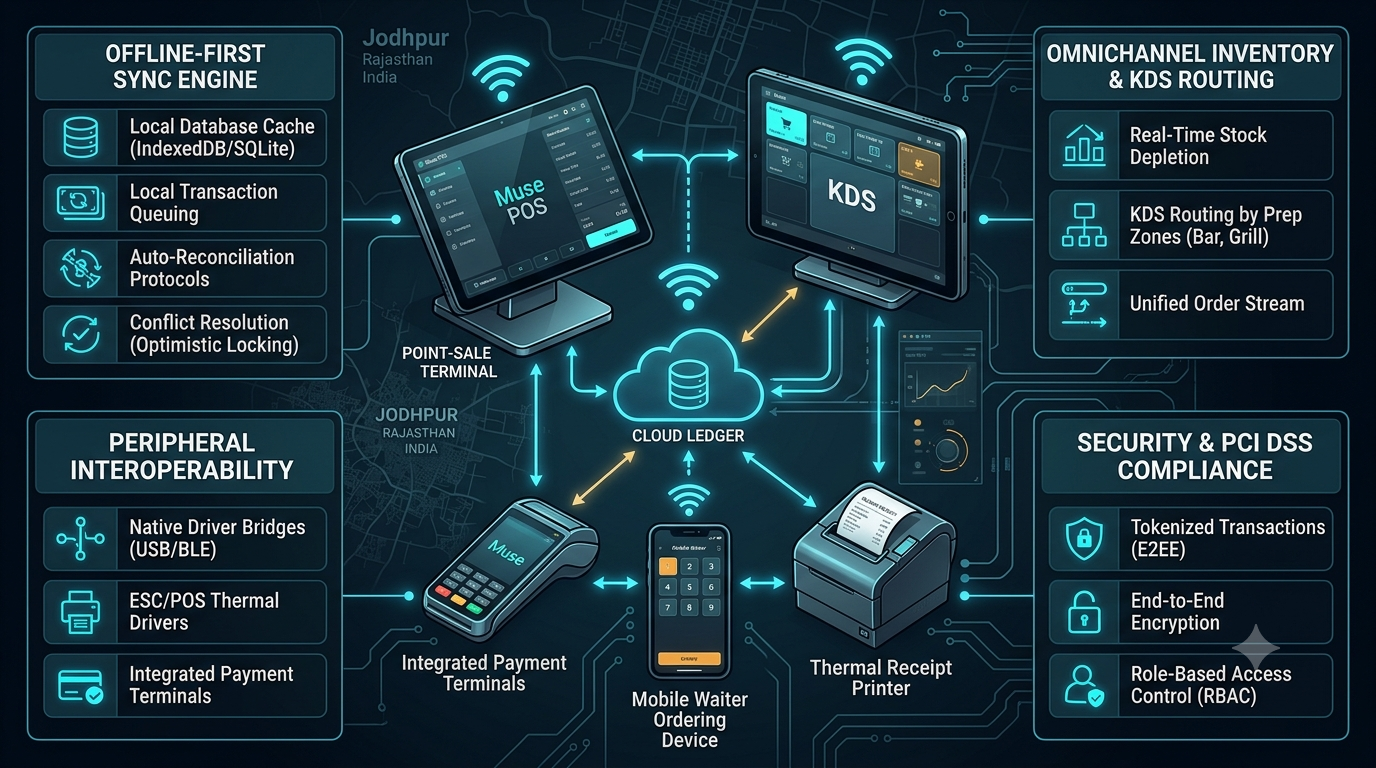
In high-volume retail, dining, and multi-location enterprise operations, point-of-sale software is no longer a simple cash register—it is the central command hub for real-time inventory synchronization, offline transaction processing, and omnichannel customer engagement.
Built for modern scalability, Muse POS (musepos) combines an intuitive frontend interface with a low-latency, resilient backend architecture designed to maintain 100% operational uptime, even during network disruptions.
Technical Architecture & Core Capabilities
System Module Modern POS Requirement Muse POS Engineering Approach
Offline Performance Zero downtime during internet outages. Local SQLite/IndexedDB caching with auto-reconciliation queues.
Data Synchronization Instant multi-terminal update propagation. WebSockets with fallback long-polling over REST APIs.
Hardware Interoperability Peripheral stability (printers, scanners, terminals). Native driver bridges for BLE, USB, and Ethernet peripherals.
Security & Compliance Strict PCI DSS and tokenized payment safety. End-to-End Encryption (E2EE) with tokenized payment gateway integration.
Key Enterprise Features of Muse POS
1. Offline-First Synchronization Engine
Network drops should never interrupt checkout lines. Muse POS utilizes an offline-first transactional engine:
Local Transaction Queuing: When network connectivity is lost, sales data, inventory adjustments, and payment tokens are encrypted and queued locally.
Conflict Resolution Protocols: Once reconnected, local database logs perform optimistic locking and timestamp reconciliation to update central cloud servers without duplicating orders.
2. Omnichannel Inventory & Order Management
Handling physical stores alongside online storefronts requires unified inventory state tracking.
Real-Time Stock Depletion: Stock levels decrement across all sales channels instantly upon receipt generation.
Centralized Kitchen Display System (KDS): For restaurant environments, orders route dynamically to kitchen display terminals based on preparation zones (e.g., bar, grill, prep station).
3. Modular Peripheral Integration
Connecting legacy and modern retail hardware often presents compatibility challenges. Muse POS isolates hardware communication layers:
Thermal Printer Management: Direct ESC/POS command generation ensures lightning-fast receipt printing.
Integrated Payment Terminals: Direct API integration with major payment processors eliminates manual input errors on pin pads.
Security & Compliance Standard
┌─────────────────────────────────────────────────────────────┐
│ MUSE POS TRANSACTION FLOW │
├─────────────────────────────────────────────────────────────┤
│ Card Swipe/Tap ──> Terminal Tokenization (E2EE) │
│ │ │
│ ▼ │
│ Local Database Cache ──> WebSocket Payload Sync │
│ │ │
│ ▼ │
│ Cloud Ledger ──> ERP / Accounting API Integration │
└─────────────────────────────────────────────────────────────┘
Security is engineered directly into the application pipeline:
PCI DSS Compliance: Payment card data is tokenized at the hardware terminal layer—sensitive PAN data never touches the POS memory or database.
Role-Based Access Control (RBAC): Granular permissions protect manager overrides, discount authorizations, and daily till closures.
Scaling Retail Operations with Confidence
Muse POS provides the bridge between fast-paced on-premise checkout needs and cloud-based business intelligence. By combining resilient offline functionality, flexible hardware support, and strict payment security, enterprise businesses can expand store locations and manage peak traffic seamlessly.
Leave a Reply