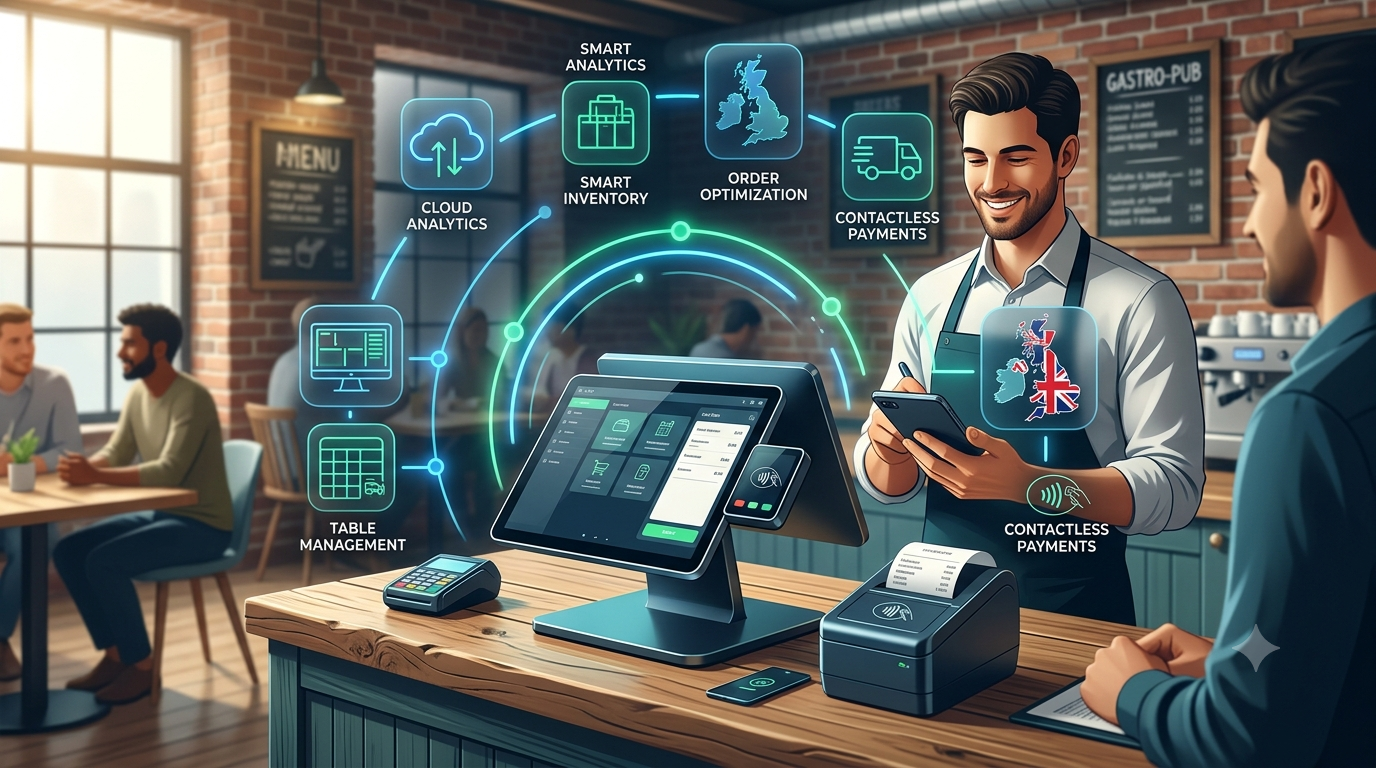
Running a restaurant in the UK involves much more than taking orders and printing receipts. Restaurant owners need to manage **sales, tables, menus, staff, inventory, payments, kitchen operations, and customer orders** while keeping service fast and efficient.
This is where modern **restaurant POS software UK** solutions can make a significant difference.
A modern EPOS system can bring daily restaurant operations together in one platform, helping staff process orders while giving owners and managers better visibility into business performance.
In 2026, restaurant technology is increasingly moving toward **cloud EPOS, QR ordering, integrated payments, real-time inventory, kitchen display systems, delivery integrations, customer loyalty, and data-driven reporting**.
## What Is Restaurant POS Software?
Restaurant POS software is a technology platform designed to manage sales and operational activities within a restaurant.
Unlike a basic cash register, a modern restaurant POS can connect multiple parts of the business, including:
* Order taking
* Table management
* Billing
* Card payments
* Kitchen operations
* Inventory
* Staff management
* Customer data
* Online orders
* Reporting
For restaurants with multiple locations, a POS platform can also provide centralized management and reporting.
## Why UK Restaurants Need Modern EPOS Software
Restaurant operations can become complicated when different systems are used for different tasks.
For example:
**POS → Kitchen → Inventory → Payments → Reporting**
If these systems do not communicate effectively, staff may need to enter the same information multiple times.
A connected EPOS system can help bring these workflows together.
For UK restaurants, useful capabilities can include:
* Faster order processing
* Integrated payment options
* Better stock visibility
* Automated reporting
* Kitchen order management
* Online ordering integration
* Multi-site management
## Key Features of Restaurant POS Software UK
### 1. Fast Restaurant Billing
Speed matters during busy restaurant periods.
A modern POS interface should allow staff to quickly:
* Select menu items
* Add modifiers
* Apply discounts
* Split bills
* Process payments
* Print or send digital receipts
A well-designed interface can reduce unnecessary steps during busy service.
### 2. Table Management
For dine-in restaurants, table management is an essential feature.
Staff can use the POS to manage:
* Table availability
* Open orders
* Table transfers
* Guest counts
* Bill splitting
* Table status
A visual floor plan can make it easier for staff to understand the current restaurant layout.
### 3. Kitchen Order Management
Restaurant orders need to reach the kitchen accurately and quickly.
A POS can connect front-of-house ordering with:
* Kitchen printers
* Kitchen Display Systems
* Preparation stations
* Order-status workflows
For larger restaurants, different items can be routed to different kitchen stations.
For example:
**Drinks → Bar**
**Starters → Starter Station**
**Main Courses → Main Kitchen**
This can help organize kitchen operations during busy periods.
## 4. Inventory Management
Food costs can significantly affect restaurant profitability.
Restaurant EPOS software can connect sales data with inventory information to help owners monitor stock movement.
Features can include:
* Ingredient tracking
* Product inventory
* Low-stock alerts
* Purchase management
* Supplier records
* Stock adjustments
* Waste tracking
A restaurant can use sales information to understand which menu items are moving quickly and where inventory needs attention.
## 5. Online Ordering Integration
Online ordering has become an important part of restaurant operations.
A modern restaurant POS can integrate with online ordering channels so that orders can flow into the same operational system.
Depending on the platform and integrations, this can help restaurants manage:
* Website orders
* Collection orders
* Delivery orders
* Digital menus
* Online payments
The goal is to reduce manual order entry and keep information synchronized.
## 6. QR Code Ordering
QR ordering allows customers to scan a code using their smartphone and access a digital menu.
Depending on the implementation, customers may be able to:
* Browse the menu
* Customize items
* Place orders
* Request service
* Pay digitally
QR ordering can be particularly useful for busy restaurants looking to introduce more self-service options.
## 7. Integrated Payments
Modern restaurant POS systems can connect with payment solutions to simplify checkout.
Depending on the chosen payment provider and setup, restaurants may support:
* Contactless payments
* Debit cards
* Credit cards
* Mobile wallets
* Integrated card terminals
* Cash payments
Integrated payments can reduce manual entry and help keep transaction records connected to sales information.
## 8. Restaurant Reporting and Analytics
Restaurant owners need to understand what is happening across their business.
An EPOS dashboard can provide information such as:
* Daily sales
* Sales by menu item
* Payment methods
* Discounts
* Refunds
* Busy periods
* Staff activity
* Location performance
For multi-site restaurant groups, centralized reporting can provide a broader view of operations.
## Cloud EPOS Software for UK Restaurants
Cloud-based EPOS technology allows restaurant data and management functions to be hosted through cloud infrastructure.
Depending on the system, cloud POS can provide:
* Remote access
* Centralized management
* Data synchronization
* Multi-site reporting
* Centralized menu updates
* Remote configuration
For restaurant owners managing several locations, centralized control can reduce the need to configure each site independently.
However, restaurants should also consider connectivity, offline operation, security, and backup procedures when selecting a cloud-based EPOS system.
## Multi-Site Restaurant Management
Restaurant groups have different requirements from independent restaurants.
A multi-location EPOS platform can provide centralized controls for:
* Menus
* Pricing
* Products
* Promotions
* Users
* Inventory
* Reporting
At the same time, individual locations may require their own:
* Staff permissions
* Menus
* Stock levels
* Sales reports
* Operating configurations
This combination of central control and local flexibility can be useful for growing restaurant businesses.
## AI in Restaurant POS Software
Artificial intelligence is becoming another capability within restaurant technology.
AI-powered restaurant software can potentially help analyze:
* Sales trends
* Customer ordering patterns
* Menu performance
* Inventory movement
* Demand patterns
For example, historical POS data could be analyzed to identify products that sell more frequently during particular periods.
AI can also support natural-language reporting, allowing authorized users to ask questions such as:
> “Which menu items generated the most sales this week?”
The usefulness of AI depends on data quality, system integration, and how the business uses the resulting information.
## Restaurant POS and Customer Loyalty
A POS system can also support customer engagement.
Restaurant loyalty functionality can include:
* Customer profiles
* Loyalty points
* Rewards
* Digital vouchers
* Promotional offers
* Purchase history
Connecting loyalty with POS data can give restaurants a clearer view of customer activity across ordering channels.
## Staff Management
Restaurant operations depend heavily on staff.
Depending on the POS platform, businesses can manage:
* User accounts
* Staff permissions
* Roles
* Shift information
* Sales activity
* Discounts and refunds
Role-based permissions can help limit access to sensitive POS functions.
For example, a cashier may process orders while only an authorized manager can approve certain refunds or discounts.
## Security for Restaurant EPOS Systems
Restaurant POS systems handle valuable business information and may interact with payment environments.
Security should therefore be considered when selecting or developing an EPOS system.
Important areas include:
* User authentication
* Role-based access
* Secure APIs
* Data encryption
* Software updates
* Backup procedures
* Audit logs
* Secure payment integrations
Restaurants should also understand the compliance responsibilities associated with their payment environment and chosen technology providers.
## How to Choose Restaurant POS Software in the UK
Before choosing an EPOS platform, restaurant owners should consider their actual operational requirements.
### For a Small Restaurant
Important features may include:
* Fast billing
* Table management
* Payment integration
* Basic inventory
* Sales reporting
### For a Growing Restaurant
Additional requirements may include:
* Online ordering
* QR ordering
* Customer loyalty
* Advanced inventory
* Kitchen integration
### For Restaurant Chains
Multi-site businesses may need:
* Centralized management
* Multi-location reporting
* Centralized menu control
* Location-level permissions
* Inventory transfers
* Enterprise integrations
The right feature set depends on the restaurant’s size, operating model, number of locations, and growth plans.
## Benefits of a Modern Restaurant EPOS System
A connected restaurant POS can help businesses organize multiple operational functions within one platform.
Potential benefits include:
**Faster service:** Staff can process orders and payments through a streamlined interface.
**Better visibility:** Owners can access sales and operational information through reporting tools.
**Improved inventory control:** Sales information can be connected with stock management.
**Centralized management:** Multi-site restaurants can manage important settings across locations.
**Connected ordering:** Online, dine-in, takeaway, and other order channels can potentially be integrated.
**Data-driven decisions:** Historical sales data can help businesses understand trends and customer behavior.
## The Future of Restaurant POS Software
Restaurant POS technology is moving beyond traditional billing.
The modern restaurant technology ecosystem increasingly connects:
**EPOS + Payments + Kitchen + Inventory + Online Ordering + CRM + Analytics + AI**
This creates a connected operational platform where information can flow between different parts of the restaurant.
Future restaurant POS systems are likely to place greater emphasis on:
* Cloud management
* AI-powered analytics
* Digital ordering
* Contactless experiences
* Automated inventory insights
* Customer personalization
* Multi-location management
* Connected restaurant operations
## Why Choose MusePOS?
MusePOS is designed around the needs of modern restaurant businesses looking for a connected **restaurant billing and EPOS solution in the UK**.
A restaurant-focused POS platform can bring essential operations together, from billing and ordering to inventory, payments, reporting, and customer management.
For independent restaurants, cafés, hospitality businesses, and growing restaurant groups, the right EPOS technology can provide a foundation for more connected day-to-day operations.
## Conclusion
Modern **restaurant POS software UK** solutions are becoming much more than digital cash registers.
A well-designed EPOS system can connect **billing, table management, kitchen operations, inventory, payments, online ordering, customer loyalty, and analytics** in one technology ecosystem.
For restaurants planning their technology strategy in 2026, the focus should be on choosing a POS platform that fits current operations while providing the flexibility to support future growth.
With the right restaurant EPOS system, businesses can create a more connected workflow for staff, managers, and customers while gaining better visibility into everyday restaurant performance.
Leave a Reply