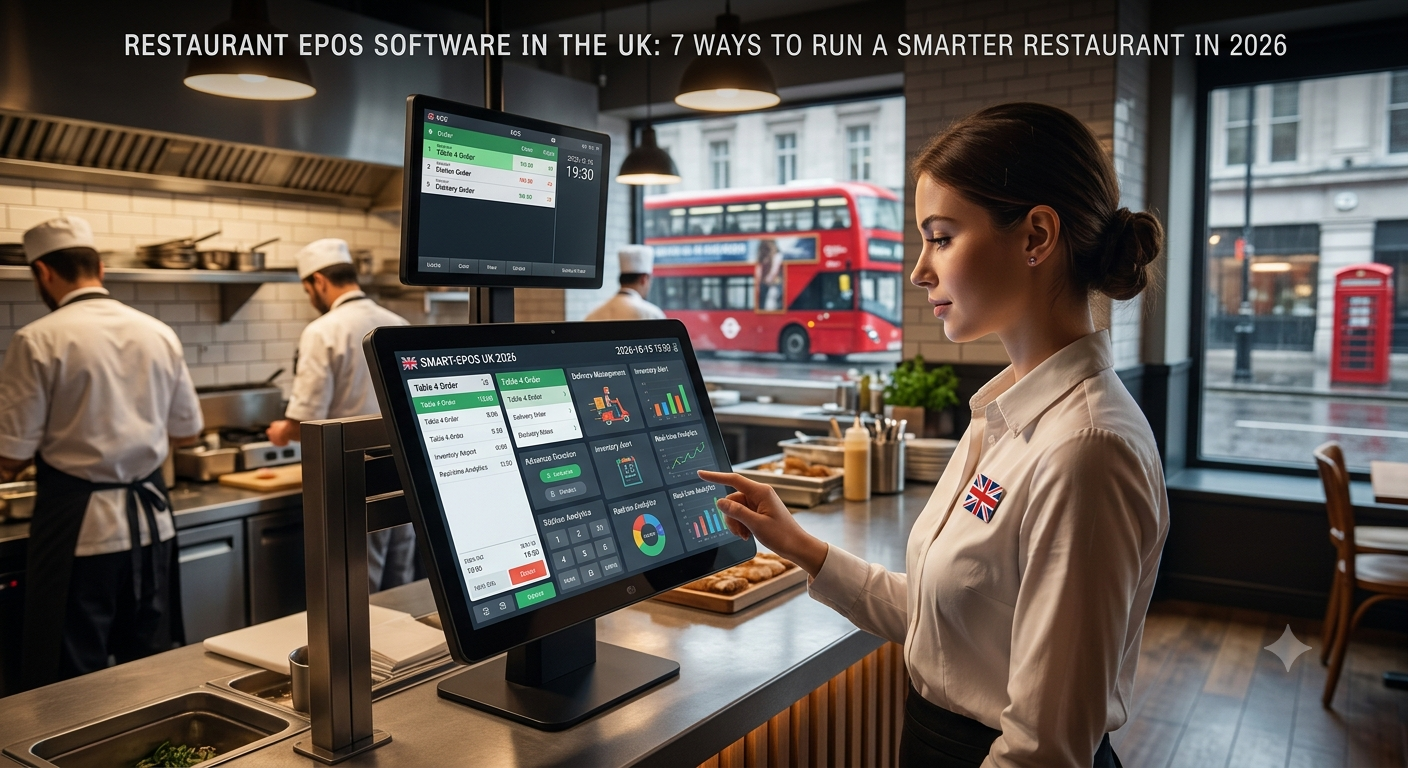
Running a restaurant in the UK involves much more than preparing great food. Restaurant owners must manage orders, payments, staff, stock levels, kitchen operations, customer expectations, and operating costs—all while delivering a consistent dining experience.
When these activities rely on separate tools or manual processes, mistakes can happen. Orders may be delayed, stock records may become inaccurate, and managers may struggle to understand which menu items generate the best returns.
This is where modern **restaurant EPOS software** can make a difference. An integrated electronic point of sale (EPOS) system helps restaurants coordinate daily operations, process transactions, monitor sales, and manage orders from a central platform.
In 2026, cloud-based restaurant POS systems, kitchen display systems, digital ordering, and real-time reporting are helping hospitality businesses rethink how they manage their operations.
For restaurants, cafés, takeaways, and quick-service businesses, choosing the right EPOS solution can be an important step towards improving efficiency and preparing for future growth.
## What Is Restaurant EPOS Software?
Restaurant EPOS software is a digital system that helps hospitality businesses process orders and payments while managing important operational activities.
Unlike a basic electronic till, a modern restaurant EPOS system can connect front-of-house operations with kitchen workflows, stock management, online ordering, and business reporting.
Depending on the platform, common features include:
– Restaurant billing and payment processing
– Table management and waiter ordering
– Kitchen order tickets and kitchen display systems
– Menu and product management
– Inventory and stock tracking
– Takeaway and online ordering
– Customer loyalty programmes
– Sales reports and business analytics
– Multi-location management
The right feature set depends on the restaurant’s size, service model, and operational requirements.
## 1. Cloud-Based POS Systems Give Restaurant Owners More Flexibility
Cloud-based POS software allows authorised users to access business information through supported dashboards and connected devices.
For restaurant owners managing busy shifts or multiple locations, this can make it easier to review sales performance, monitor operations, and update selected business settings without being physically present at the till.
A cloud-based restaurant POS system may support:
**Remote sales monitoring:** Review sales summaries and performance reports through supported applications.
**Centralised menu management:** Maintain menu information and pricing across locations where the system supports central administration.
**Business visibility:** Access selected operational information without relying entirely on locally stored reports.
**Simplified expansion:** Establish more consistent workflows as the business grows.
Restaurant owners should also evaluate offline functionality, data synchronisation, backups, access permissions, and internet reliability before selecting a cloud EPOS solution.
## 2. Kitchen Display Systems Help Improve Order Accuracy
A busy kitchen depends on clear communication between front-of-house staff and kitchen teams. Paper tickets and verbal instructions can become difficult to manage when order volumes increase.
A Kitchen Display System (KDS) displays incoming orders on a digital screen, helping kitchen staff see what needs to be prepared and track order progress.
When integrated with restaurant EPOS software, a KDS can support:
– Direct routing of orders to the kitchen
– Clear display of order details and modifiers
– Order-status tracking
– Better coordination between kitchen stations
– Improved visibility for front-of-house staff
– Reduced reliance on paper tickets
For example, when a waiter submits an order through the POS terminal or a supported waiter application, the order can appear on
Leave a Reply